Walking tours in

Prague: Stones That Outlast Their Rulers
Eight stops (~2.6 km, no leg over 850 m) thread Prague's Old Town from the Astronomical Clock to the bottom of Wenceslas Square: a medieval cosmic calendar built to impress an empire, a Gothic cathedral sheltering a Danish astronomer's bones, the quarter where Kafka grew up haunted by bureaucracy and identity, the Jewish Cemetery's twelve layers of graves pressed into a space the ghetto walls would not expand, 80,000 names on a synagogue wall, a medieval bridge where thirty saints watch the river, a Reformation chapel where a priest was condemned to the fire, and a boulevard where communism ran out of excuses. The narrative thread connecting all eight: no regime that has ruled Prague since 1357 has managed to rewrite the city's stones — each has only added its own layer to a longer memory.
73 min
3.4 km
+7

San Sebastián: Pintxos, Cider, and the Two-Euro Meal
Donostia's food culture is not a restaurant event — it is a standing ritual. Eight stops (~1.2 km, all legs under 700 m) thread the Parte Vieja bar strip into the Gros neighbourhood and back to the Kursaal riverside: a covered market still smelling of the morning catch, a square whose balconies once numbered bullfight seats, the cheesecake that became a global recipe, the anchovy bar whose counter reads like a taxonomy of the Cantabrian coast, a cider tradition poured in arcs, and the calmer Gros street where residents outnumber tourists at the bar. No Michelin stars on this route — only two-euro glasses, standing room, and the txikiteo rhythm that turns a Tuesday into a feast.
38 min
1.2 km
+6

Paris Montmartre: Cabaret Lights, Village Corners, and Basilica Stone
Montmartre on this ridge reads like two centuries arguing in stone: gaslight cabaret at the boulevard’s lip, Art Nouveau iron at Abbesses, a wall of handwritten “I love you” in hundreds of languages, then the chalky travertine dome of Sacré-Cœur crowning the same hill where Paris once kept a medieval parish church. Narrow lanes still pretend to be a village; Place du Tertre sells quick portraits where painters once starved; the rebuilt Bateau-Lavoir recalls cubist winters; ivy and pink stucco frame a lane that tourists photograph as shorthand for old Montmartre. Eight stops (~1.9 km, all legs under 0.5 km) climb from Blanche toward the Abreuvoir curve — one thread from spectacle to sanctuary without leaving the eighteenth arrondissement.
44 min
1.9 km
+5

Paris: Island Crowns, Revolutionary Stone, and Museum Light
Paris on this route reads power carved in stone and glass: Gothic kingship on an island, a jewel-box chapel for relics, a medieval palace turned revolutionary tribunal, a bookshop quay where modernism was financed in print, a republican secular temple crowning crypts of genius, a baroque parish hiding Romantic murals, a railway palace reborn as a temple of Impressionism, and a square where monarchy and terror both met the blade before an Egyptian obelisk rose as a new civic compass. Eight stops (~2.9 km, all legs under 1.2 km) thread the inner Seine left bank from Notre-Dame to the Place de la Concorde — one arc from crowned narrative to public light.
77 min
4.6 km
+5

Leiden: Keys, Quills, and Siege Bread
Leiden’s story is a braid of survival and reputation: a medieval shell keep watching two Rhine branches, a university founded in 1575 as a reward after the Spanish siege, Pilgrim printers beside a Gothic church, botanical science in a walled garden, cloth wealth turned into paint, and gates that still frame how the Golden Age grew outward. This twelve-stop route (~2.4 km, all legs under 700 metres) threads the Burcht, Hooglandse and Pieterskerk, civic Renaissance stone on Stadhuisplein, the Rapenburg’s academic façades, Hortus plant hunters, the Morspoort’s marsh memory, Rembrandt’s birth alley, the Lakenhal’s art in a former cloth hall, Van der Werf’s siege legend, and the Zijlpoort’s eastern skyline — one arc from keys of liberty to the ink and colour that exported Leiden’s name.
81 min
4.1 km
+3

Utrecht: The Dom, the Canals, and the City Below
Utrecht grew backwards into its river: Roman soldiers camped on a Rhine bend, medieval bishops stacked stone above holy ground, merchants dug wharf cellars at waterline, and students claimed the noise between. This twelve-stop route (~3.2 km, all legs under 500 metres) links Domplein, the Oudegracht’s split-level quays, civic architecture, the Speelklok’s mechanical choirs, Paushuize’s papal ambition, quiet Nieuwegracht gardens, religious art at Catharijneconvent, and the lantern-lit corners of Ledig Erf — one continuous story about water, power and reinvention.
56 min
2.3 km
+5

Sea Floor to Sluiskade: A Walk Through the Newest Old Town in Europe
Ten stops through Almere Haven — the oldest district of one of the youngest cities on Earth. Started on bare polder seabed in 1975, the first key was handed over on 30 November 1976 at café De Roef. The architects didn't try to design something new — they deliberately copied the small canals and human scale of Zuiderzee towns like Edam, so the first 100 Amsterdammers would feel at home on land that wasn't there a decade earlier. The route covers the first house in Almere, a ship-shaped church with a 35-metre RIJP tower, an Edam-inspired canal, the cloverleaf-pattern Stadswerfpark, the marina on the Gooimeer, and a final dike where in 1968 there was still water. A 50-year-old town pretending — convincingly — to be 500.
95 min
5.5 km
+4

Breda: Nassau City, the Peat Boat & the Princely Gardens
Walk a compact loop of about 2.2 km through the heart of Breda — the city that was the cradle of the House of Orange-Nassau for almost four centuries. Ten outdoor stops link the Grote Markt, the Brabantine Gothic Grote Kerk with its Nassau tombs, the beguinage that Nassau protected, the castle where Orange lived, the water gate that remembers a Trojan-horse peat boat, the restored harbour, the Nassau garden of Park Valkenberg, and the Parade of the old military academy. Cobblestones throughout; allow 2 to 2½ hours. Every stop is publicly accessible from the street; several buildings (Grote Kerk, Begijnhof garden, Stedelijk Museum) can optionally be entered.
52 min
2.2 km
+3

Ghent on a Fork: From Waterzooi to Cuberdon
Fourteen edible stops across the oldest food map of Ghent — waterzooi on Sint-Baafsplein as Charles V ate it, chocolate pralines from a family workshop, Belgian waffles from an 1839 family firm that stunned the 1958 World Fair, Flemish stoverij cooked in beer with Tierenteyn mustard, a medieval meat hall still showcasing regional products, a mustard shop from 1790, Ghent's oldest bakery and its 900-year-old Sint-Hubertus bread, a café from 1776 named after the gallows, 200 jenevers, cuberdons handmade since 1904, medieval hop-less gruut beer, and a boot-glass of beer you can only drink if you leave your shoe behind. A walking city told through what's on its plates.
61 min
2.3 km

Amsterdam on a Fork: From Herring Cart to Rijsttafel
Fourteen edible stops across the oldest food map of Amsterdam — from a raw herring at the Haarlemmersluis to a jenever at the 1679 proeflokaal on Pijlsteeg. Apple pie from 1642 brown cafés, cheese from the Nine Streets, Flemish fries, bitterballen, handmade chocolates, the founding of the croquet sandwich in 1945, and a table set with the spices the VOC brought back from 10,000 miles away. A walking city told through what's on its plates.
88 min
4.5 km
+5

1666: London's Great Fire and the Phoenix City
Walk the four days of September 1666 that erased four-fifths of London and the forty years that rebuilt it. From Samuel Pepys's buried Parmesan to the Monument that points exactly at the bakery where it all started, to Christopher Wren's fifty-one churches and his masterpiece at St Paul's. Fourteen stops along the edge of the medieval City of London.
79 min
3.7 km

Ghent: Medieval Metropolis of the Arteveldes
Walk through the city that was once the second-largest north of the Alps — the Ghent of Van Eyck's altarpiece, the Counts' castle, the cannon called Mad Meg, and the Pacification that briefly united the Low Countries. Twelve centuries of wool, water and defiance in a single historic core.
64 min
2.3 km

Antwerp: Rubens & the Golden Age of Trade
Walk through the city that once ran Europe. Around 1560 Antwerp was the richest port on Earth — home to Rubens, to the world's largest printing house, to the first skyscraper in Europe and to a cathedral tower still unmatched in the Low Countries. This ~3 km loop links twelve outdoor stops (museums are optional) between the Scheldt and the Meir, from Brabo's severed hand to Rubens's tomb and the Plantin-Moretus presses. Cobblestones throughout; allow 2½–3 hours at a relaxed pace.
61 min
2.7 km

Muiden: The Castle, The Poet and the Waterlines
Walk through a 700-year-old fortress town (outdoors; optional indoor museum at the Muiderslot). Designed as a ~3.7 km loop: checkpoints roughly 200–500 m apart on harbour paths and quiet streets, avoiding busy through-roads where possible. Start and end at the Muiderslot — easy to combine with regional bus (e.g. Gooi en Vechtstreek) or car (P+R Muiden and street parking nearby; check local signs). Cobblestones and bridge slopes: allow extra time for mobility aids. Public outdoor stops; the Tesselschade statue is inside the paid castle gardens (optional).
61 min
3.1 km

Harderwijk: From Hanseatic Trade to Academic Fame
Explore the winding streets of Harderwijk. Discover where world-famous scientists graduated and how the city protected itself from the Zuiderzee waves.
30 min
1.0 km
+1

Elburg: Secrets of the Hanseatic Square
A 1km journey through one of Europe's most unique rectangular cities. Solve puzzles by looking at the stones, gates, and walls of this medieval masterpiece.
43 min
1.9 km
+1
Zutphen for Two
Discover together the Torenstad: one of the best-preserved medieval towns in the Netherlands. Zutphen surprises with the Berkelpoort, a church once taller than Utrecht Cathedral, the only original chained library in the Netherlands — and the story of an English poet who died here like a knight.
50 min
2.7 km
+3
Deventer for Two
Discover together one of the oldest and most beautiful cities in the Netherlands. Deventer surprises with 800-year-old churches, medieval alleyways, a romantic riverside promenade and a gingerbread whose recipe has been a closely guarded secret for 600 years.
47 min
2.4 km
+3
Reims Girls Weekend
Discover the highlights of Reims: from the Gothic cathedral to world-famous champagne houses. A mix of history, stories, art and bubbles — perfect for an unforgettable girls' weekend.
49 min
2.5 km
+2
The Printing Revolution: Coster, Enschedé & the Birth of Books
Did Johannes Gutenberg really invent printing? Haarlem has a different story to tell! Walk through the historic streets where Laurens Janszoon Coster allegedly discovered movable type, visit the Enschedé printing museum still active after 300+ years, and explore the cultural legacy that made Haarlem a European center of knowledge and literature.
61 min
2.3 km
+2
Brewed in Haarlem: Beer, Breweries & Medieval Trade
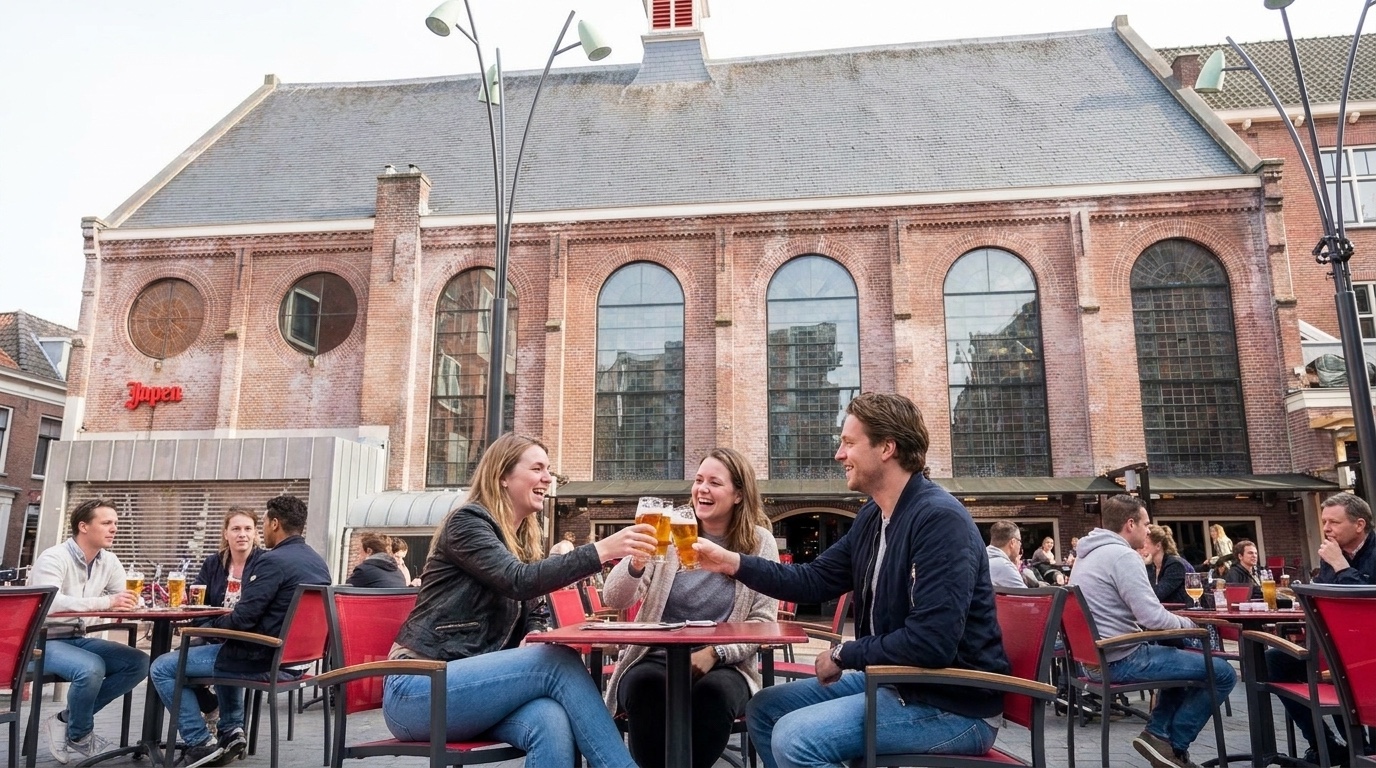
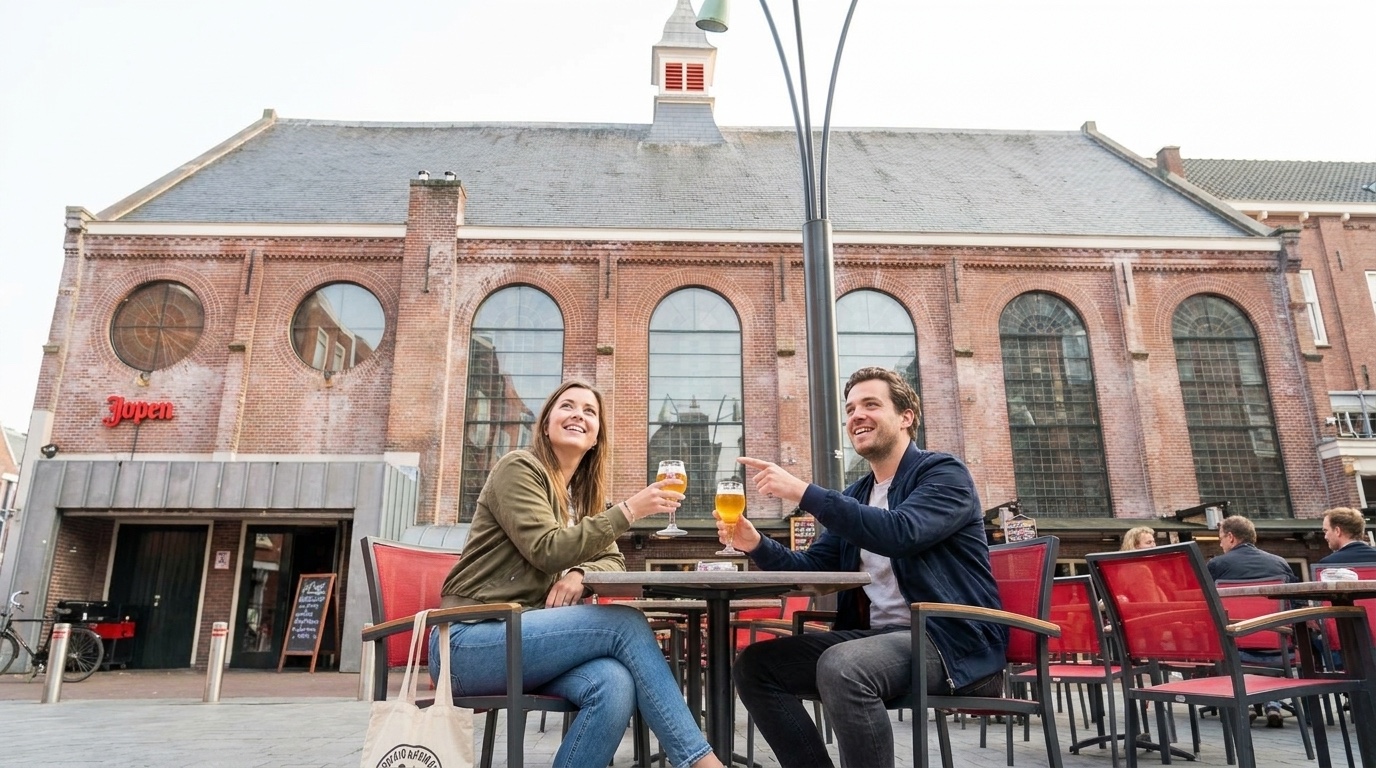
Before Amsterdam had diamonds, Haarlem had beer. Medieval Haarlem exported 60 million liters annually - enough to fill 24 Olympic pools! This tour takes you through brewery guilds, beer tax riots, the rise and fall of an industry, and the modern craft beer revival. Walk past historic brewery buildings, discover why monks made the best beer, and end at Jopen Brewery - where medieval recipes meet modern craft. Thirsty for history? Let's pour!
69 min
2.9 km
+1
Masters of the Brush: Frans Hals & the Golden Age
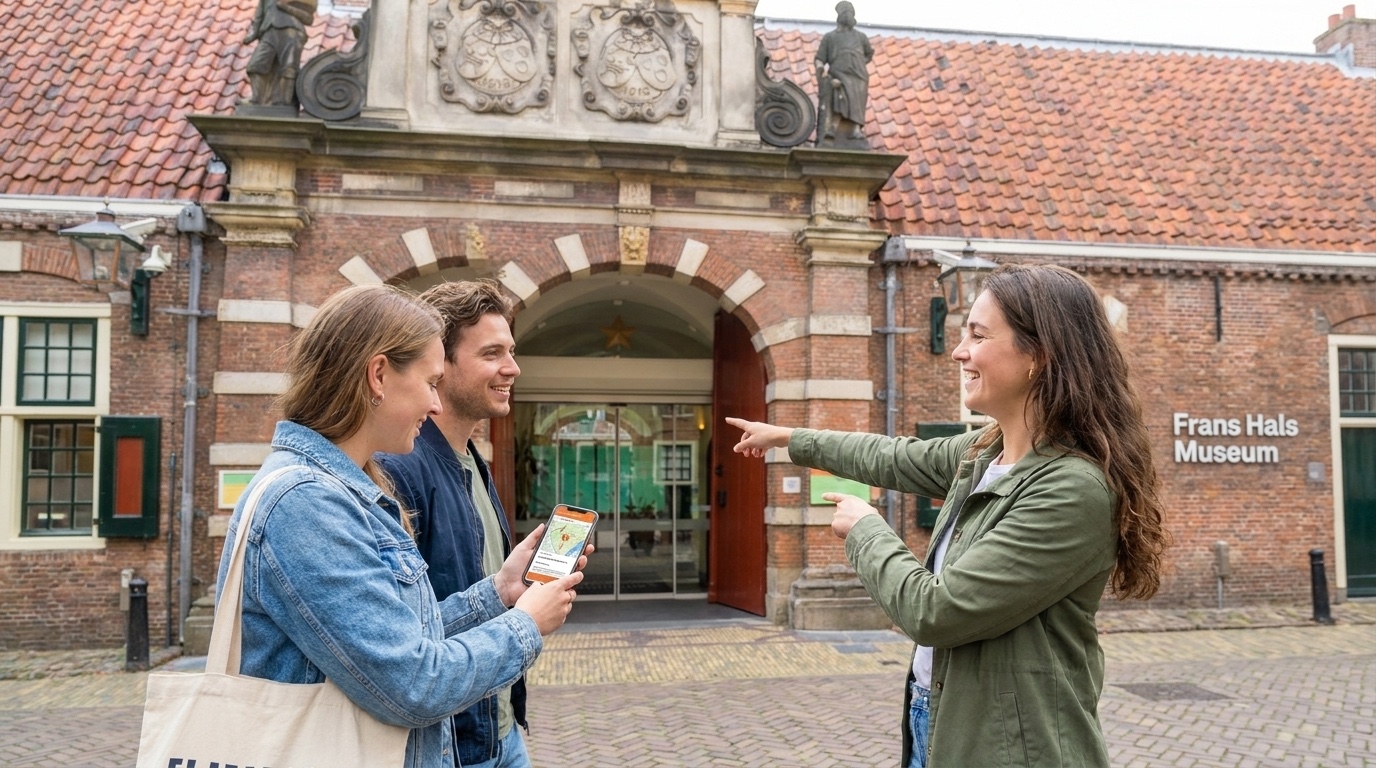
While Amsterdam gets the glory, Haarlem was where the masters actually worked. This tour reveals the secret: Haarlem's clear northern light, thriving art market, and wealthy merchant patrons created the perfect conditions for artistic genius. Walk past Frans Hals' home, discover the oldest museum in the Netherlands, and learn how paintings went from church propaganda to middle-class status symbols. Every street holds a masterpiece story.
57 min
2.3 km
+2
Hidden Courtyards of Haarlem
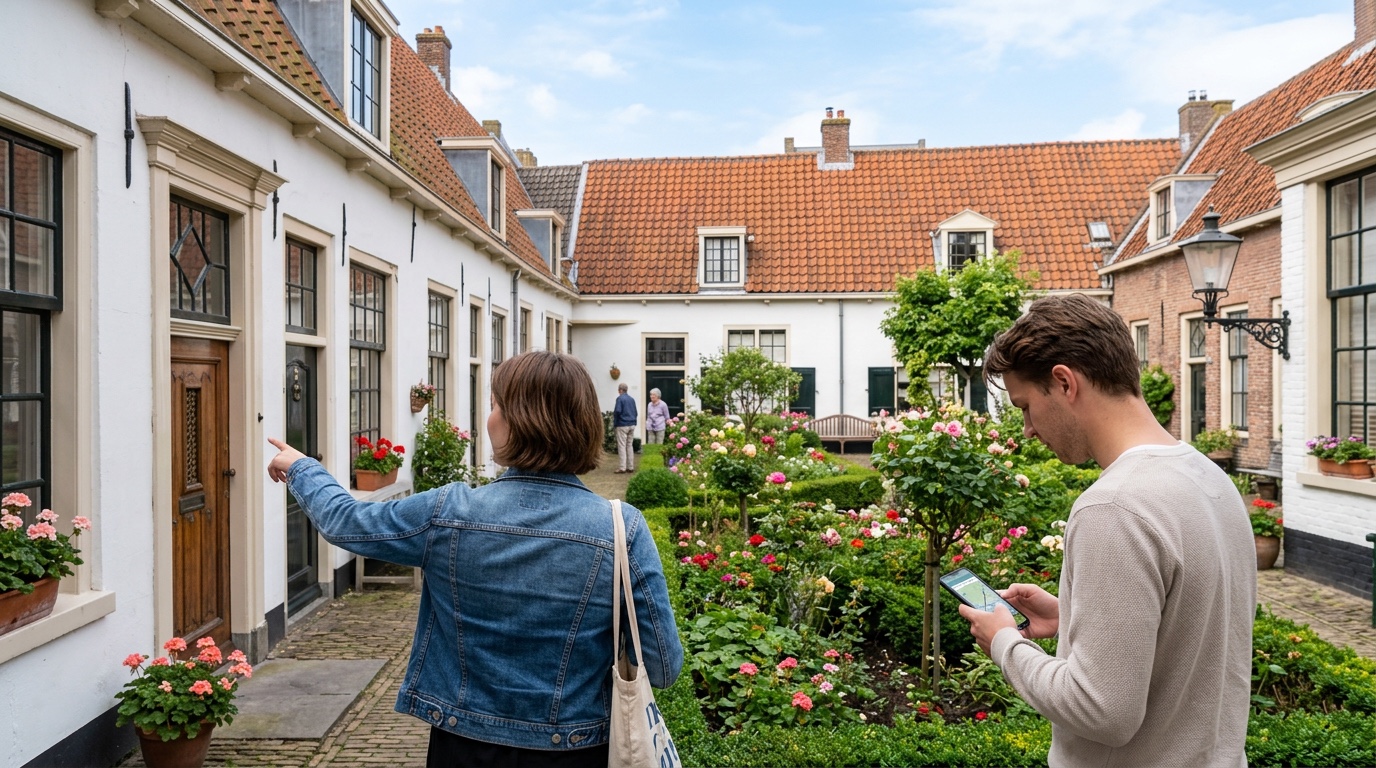
Discover the secret courtyards (hofjes) of Haarlem. These hidden gems were built as almshouses for the elderly and poor, creating peaceful oases in the bustling city. Each hofje tells a unique story of compassion and community.
91 min
4.9 km
+1
Haarlem's Lost Gates: The Siege of 1572–73
Walk through history along Haarlem's 14 vanished city gates. Discover where brave defenders held the line during the legendary 7-month Spanish siege. Only one gate survived - can you find it?
105 min
6.0 km
+1
Resistance Stories: Hidden Heroes of WWII
This powerful tour reveals the untold stories of Dutch resistance during WWII. From Anne Frank to lesser-known heroes, from secret printing presses to audacious sabotage missions, experience the courage that defined a generation. Each location holds a story of hope, sacrifice, and defiance against tyranny.
83 min
3.8 km
+2